Investors often face a dilemma after buying a stock: they feel happy about the gains but anxious about whether it is the right time to sell. This emotional tug-of-war is common and highlights how deeply psychology influences investing.
While finding the right entry point matters, knowing when to exit is even more important. Yet many investors, especially beginners, make this decision emotionally rather than logically. Feelings like the fear of losing profits, greed for more returns, or overconfidence often take control.
Let us explore how psychology affects investors at different stages and how to identify the right time to sell a stock.
Investor Mindset: The Psychology Behind Profit Booking
The psychology behind booking profits varies not only from investor to investor but also by the stage they are in.
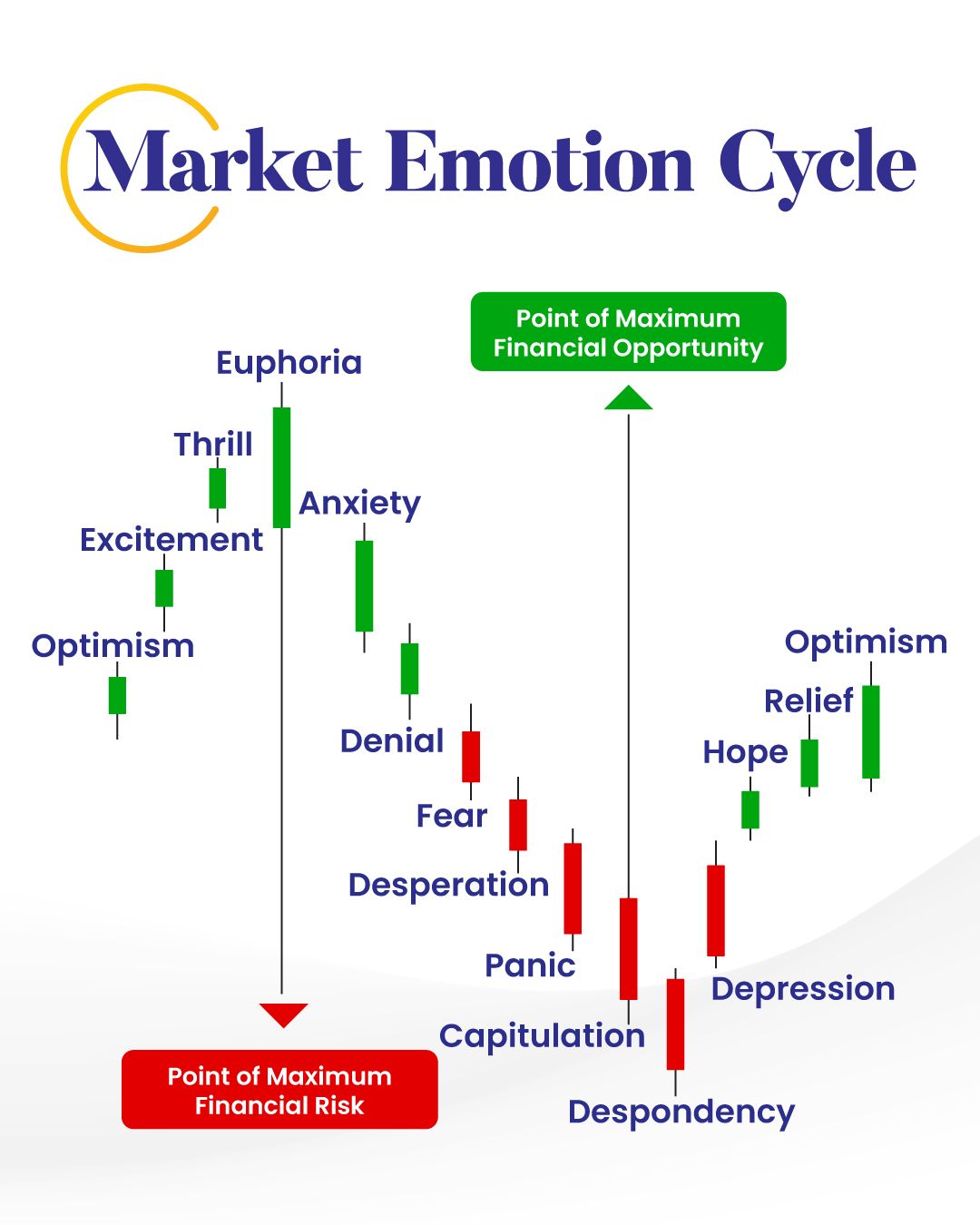
Market Emotion Cycle
Novice Investors: New investors struggle the most, particularly with the core emotion: ‘fear of losing what’s gained’. They often treat even small profits as big achievements and rush to book them. Novice investors check prices frequently, and every red candle feels like a threat. Their decisions are usually guided more by the fear of reversal than by the actual potential of the stock. After selling, they often feel frustrated when the stock rallies further and reaches new highs.
Technically, loss aversion bias is common in this category, losses feel far more painful than equivalent gains feel rewarding.
Intermediate Investors: After booking a few gains, even small ones, intermediate investors start believing the market is easy and that they have ‘cracked the code’. They have moved beyond the basics but still lack discipline. They try to buy at exact bottoms and sell at exact tops, in short, timing the market.
Here, overconfidence bias dominates. Investors overestimate their skills and ability to predict outcomes, eventually leading to poor decisions and losses.
Experienced Investors: These investors are far more mature. They follow a process, not profits. They do not sell out of fear; instead, they act according to a plan. Every exit has a clear rationale, overvaluation, target achieved, portfolio rebalancing, or fundamental deterioration.
They do make mistakes, but they treat each one as a lesson. They seek information to justify holdings, but not in the way confirmation bias works; they challenge their own assumptions and continuously refine their judgments.
Emotional Profit Booking – How to Overcome It To avoid impulsive decisions, here are some simple ways to stay disciplined and make rational choices.
Steps to Overcome Emotional Profit Booking
Predefined Entry and Exit: Your plan should be ready before you hit the buy button, not after. Create a proper entry and exit strategy with possible adjustments based on market conditions. Making the plan is crucial; sticking to it is even more important.
Robust Plan: Along with entry and exit, define your stop loss and holding period. This helps reduce second thoughts, a common issue today, and prevents emotional decision-making.
Screen Time: Beginners and intermediate traders often track prices and news constantly, which amplifies anxiety and leads to premature selling.
Investment Journal: A trading journal is your best guide. Record everything, from buy and sell decisions to motivation and emotions. Reviewing it regularly uncovers behavioural patterns and prevents repeat mistakes based on fear, greed, hope, or regret.
Automation: Use system-based rules for entry, exit, stop loss, trailing stop loss, and averaging. Automation helps bypass emotional reactions to short-term market movements.
Pause: Always pause before making impulsive buy or sell decisions. Note down your rationale, analyse it, and then act. This prevents emotionally driven mistakes.
What Is the Right Time to Exit a Stock?
The right time to sell depends on factors like company performance, overall market trends, and your personal financial goals. Here are situations where selling makes sense:
Financial Goals: Exit when your goal is achieved or close to being achieved and the market looks uncertain. Booking profits protects gains and aligns your money with your priorities.
Investment Thesis Breaks: If the primary reason for your investment no longer stands, change in business model, rising competition, or unfavourable government policies, it is wise to review and exit.
Fundamental Issues: Weakening financial health, falling sales, lower profits, growing debt, or legal troubles, is a red flag. Exit before the damage deepens.
Better Opportunity: Selling can be smart if you find a stronger opportunity with lower risk and better return potential. Capital rotation improves portfolio performance.
Overvaluation: If a stock trades far above its fair value versus peers or historical averages, booking profits is sensible. Overvalued stocks come with higher downside risk.
Rebalancing: If a stock grows too large in your portfolio, trimming it ensures balance and diversification.
Technical Signals: Breaking key support levels, trend reversal, or loss of momentum can be valid exit triggers, provided they align with your pre-defined plan.
Target or Stop Loss Hit: Respect your levels. Exiting when either hits prevents emotional mistakes and protects against sudden reversals.
Emergency Needs: If you face urgent financial requirements, medical emergencies or job loss, it is absolutely fine to sell. Your financial safety comes first.
Wrapping Up
Profit booking is not just about selling a stock for gains, it’s about making balanced, thoughtful decisions. Every investor, from beginner to seasoned, experiences emotions, but understanding and managing them is what separates disciplined investors from emotional ones.
Plan your entry and exit in advance, follow your strategy, and avoid reacting to short-term market noise. Stay focused on your goals, track your investments, and remain disciplined even when emotions run high.
Remember, consistent success in the market comes from patience and process, not impulse.
The right time to exit is when your plan tells you to, not your emotions.


 Join Telegram